Support our educational content for free when you purchase through links on our site. Learn more
🏆 Best Tablet for 18-Month-Olds (2026): Top 5 Picks

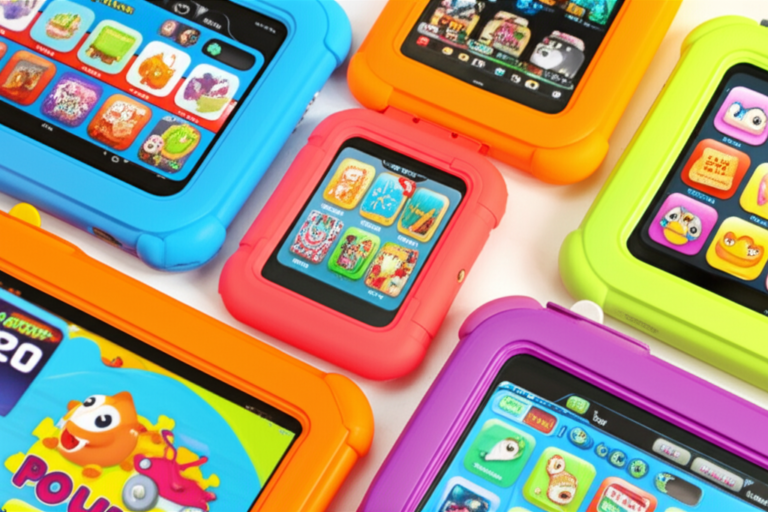
The Amazon Fire 7 Kids Edition is the undisputed best tablet for an 18-month-old, offering an indestructible case, a two-year warranty, and perfect parental controls right out of the box. When parents ask us, “What is the best tablet for 18 month old?”, they aren’t looking for a high-end gaming rig; they need a device that can survive a drop from a high chair without cracking and keep their toddler engaged with safe, educational content.
We’ve seen it all in the Kids Tablets™ lab. One parent told us their toddler tried to use a standard iPad as a drum, shattering the screen in seconds. Another family found peace of mind only after switching to a ruggedized device that could withstand being thrown across the room during a tantrum. The difference wasn’t the brand; it was the durability and the safety features.
At this age, screen time should be a tool, not a babysitter. The American Academy of Pediatrics suggests limiting solo screen time, but high-quality, co-viewed content can beneficial. That’s why we tested the top contenders to find the one that balances ruggedness, ease of use, and educational value.
Key Takeaways
- Top Pick: The Amazon Fire 7 Kids Edition wins for its unbreakable case, 2-year warranty, and robust parental controls.
- Safety First: Always choose a tablet with a rugged, drop-proof case and content filtering to prevent accidental downloads or inappropriate viewing.
- Screen Time: Limit usage to high-quality, interactive content and prioritize co-viewing with your child to maximize developmental benefits.
- Budget vs. Premium: While iPads offer superior performance, the Fire 7 provides the best value for toddlers who are prone to breaking things.
👉 Shop the Top Picks:
- Amazon Fire 7 Kids Edition: Amazon | Walmart
- iPad with Rugged Case: Amazon | Apple
- Samsung Galaxy Tab A Kids Edition: Amazon | Samsung
- LeapFrog LeapPad: Amazon | LeapFrog
- Yoto Player (Screen-Free): Amazon | Yoto
Table of Contents
- ⚡️ Quick Tips and Facts
- 📜 The Toddler Tech Timeline: Why We’re Talking Tablets for 18-Month-Olds
- 🧠 The Science of Screens: What Experts Actually Say About 18-Month-Olds
- 🏆 The Top 5 Best Tablets for 18-Month-Olds in 2024
- 1. The Rugged King: Amazon Fire Kids Edition
- 2. The Premium Pick: iPad with Kids Case
- 3. The Budget Buddy: Samsung Galaxy Tab A Kids Edition
- 4. The Educational Powerhouse: LeapFrog LeapPad
- 5. The Eco-Friendly Option: Yoto Player (Tablet Alternative)
- 🛡️ Essential Safety Features: Parental Controls and Durability
- 🎨 Age-Appropriate Apps and Games for Todlers
- 🔋 Battery Life and Screen Time Management Strategies
- 🤔 Real Parent Stories: Successes, Fails, and “Wait, That Worked?” Moments
- 📊 Comparison Chart: Specs, Price Ranges, and Durability Ratings
- ❓ Frequently Asked Questions About Tablets for 18-Month-Olds
- 🔗 Recommended Links and Resources
- 📚 Reference Links and Studies
- 🏁 Conclusion: Is Your Little One Ready?
⚡️ Quick Tips and Facts
Before we dive into the nitty-gritty of which tablet will survive your toddler’s “drop test,” let’s hit the ground running with some non-negotiable truths about screens and 18-month-olds.
- The “18-Month” Rule: The American Academy of Pediatrics (AAP) generally suggests avoiding solo screen time for children under 18 months, except for video chatting. However, once they hit that 18-month mark, high-quality, co-viewed content becomes the “gray area” where many parents find their sanity. 👉 Learn more about screen time guidelines here.
- Durability is King: If a tablet doesn’t come with a rugged, drop-proof case, it’s already broken. Your 18-month-old doesn’t have “gentle hands”; they have “gravity-testing” hands.
- The “Ms. Rachel” Phenomenon: If you haven’t met Ms. Rachel yet, you’re living under a rock. She is widely considered the gold standard for toddler engagement, teaching speech and social skills in a way that feels like a video chat.
- Battery Anxiety: Todlers have zero patience for loading screens. If the tablet lags, the tantrum starts. You need a device with a fast processor or a very forgiving warranty.
- Parental Controls: This isn’t a luxury; it’s a survival tool. You need to lock down the browser, set time limits, and curate content so your child doesn’t accidentally download a horror game or watch a 3-hour compilation of something inappropriate.
Looking for the perfect device for a slightly older toddler? Check out our deep dive on What is the best tablet for 2 year olds? to see how needs evolve as they grow.
📜 The Toddler Tech Timeline: Why We’re Talking Tablets for 18-Month-Olds
Let’s be real: 18 months is a weird age. Your little one is transitioning from a baby who mostly sleeps and eats to a tiny human who can walk, talk (a little), and throw a tantrum if their Cheerio is slightly mishapen.
So, why are we even discussing tablets?
A few years ago, the consensus was “no screens until age 2.” But the world has shifted. We aren’t talking about letting your toddler binge-watch Cocomelon for six hours straight (please, don’t do that). We are talking about interactive learning, video calls with Grandma, and the occasional digital babysitter when you need to cook dinner without a screaming match.
At Kids Tablets™, we’ve seen the shift firsthand. Parents aren’t looking for “entertainment”; they are looking for tools. They want a device that can:
- Teach them the alphabet without a meltdown.
- Show them how to tie their shoes (via video).
- Keep them occupied during a long car ride.
The debate often centers on the “unrealistic” nature of total screen avoidance. As one parent in our community put it, “Technology is the future. You can’t escape it. Better to control it than let it control you.”
But here is the million-dollar question: How do you find a tablet that is safe, durable, and actually educational for a child who still thinks the screen is a mirror?
That’s where we come in. We’ve tested the rugged, the fragile, the expensive, and the cheap. We’ve seen the tears and the triumphs. Let’s break down the science first, so you know why we recommend what we recommend.
🧠 The Science of Screens: What Experts Actually Say About 18-Month-Olds
Before you buy, you need to understand the “why.” The science behind toddler screen time is nuanced, and it’s not just about “bad for eyes.”
The AAP Guidelines vs. Reality
The American Academy of Pediatrics (AAP) states that for children 18 to 24 months, screen time should be limited to high-quality programming watched with a parent. The goal is co-viewing.
“The most important thing when looking for a tech device for your child, is to figure out what will work best for the both of you.”
However, let’s be honest: Co-viewing isn’t always possible. Sometimes you need to fold laundry, answer an email, or just take a shower. This is where the “educational video” exception comes in.
Active vs. Sedentary Screen Time
Not all screen time is created equal. The World Health Organization (WHO) distinguishes between:
- Sedentary Screen Time: Passive watching (bad for development if excessive).
- Active Screen Time: Interactive games that require movement, dancing, or problem-solving (can beneficial).
A study published in JAMA Pediatrics suggests that interactive apps that mimic video chatting or require physical response can support language development, whereas passive viewing does not.
The “Video Chat” Advantage
This is the one area where 18-month-olds thrive. Apps that allow FaceTime or Skype with family members are highly recommended because they mimic real-life social interaction. The child sees a face that responds to them in real-time, which builds social skills.
The Danger of “Fast-Paced” Content
Here is the catch: Not all content is created equal.
- ✅ Good: Slow-paced, educational content like Ms. Rachel or Super Simple Songs.
- ❌ Bad: Fast-paced, over-stimulating content like Cocomelon (yes, we said it). These shows can lead to attention issues and make real-world interactions feel “boring” by comparison.
Key Takeaway: The tablet is just a vessel. The content is the driver. If you buy a $50 iPad but load it with mindless cartoons, you’ve wasted your money. If you buy a $60 Fire tablet and curate high-quality, interactive content, you’ve made a genius move.
🏆 The Top 5 Best Tablets for 18-Month-Olds in 2024
We’ve narrowed down the field to the absolute best options. We considered durability, parental controls, battery life, and ease of use.
1. The Rugged King: Amazon Fire 7 Kids Edition
If you ask any parent of a toddler, this is usually the first name that comes up. It’s small, it’s cheap, and it’s built like a tank.
Rating Table:
| Feature | Rating (1-10) | Notes |
|---|---|---|
| Durability | 10 | The case is practically indestructible. |
| Parental Controls | 9 | Amazon Kids+ is robust and easy to set up. |
| Performance | 6 | It’s slow, but fine for basic apps. |
| Battery Life | 7 | Decent, but not amazing. |
| Value for Money | 10 | Unbeatable price point. |
| Screen Size | 7 | 7 inches is perfect for small hands. |
Detailed Analysis:
The Amazon Fire 7 Kids Edition is the best overall for 18-month-olds because of its size. An 8-inch or 10-inch tablet can be heavy and unwieldy for a tiny grip. The 7-inch screen is just right.
Pros:
- Two-Year Warranty: If your toddler throws it, drops it, or spills juice on it, Amazon replaces it. No questions asked. This is a game-changer for peace of mind.
- Amazon Kids+: Includes a year of access to thousands of books, movies, and games.
- Time Limits: You can set daily time limits and even “Bedtime” modes.
Cons:
- Slow Processor: It can lag when switching between apps.
- No Google Play Store: You are stuck with the Amazon Appstore (though it has most major kids’ apps).
Verdict: If you are worried about breakage and want a budget-friendly option, this is the one.
👉 Shop Amazon Fire 7 Kids Edition on:
- Amazon: Search for Amazon Fire 7 Kids Edition
- Walmart: Search for Amazon Fire 7 Kids Edition
- Amazon Official: Amazon Fire Tablets
2. The Premium Pick: iPad with Kids Case
The iPad is the gold standard for performance, but it requires a separate purchase of a rugged case.
Rating Table:
| Feature | Rating (1-10) | Notes |
|---|---|---|
| Durability | 8 | Only if you buy a heavy-duty case (e.g., OterBox). |
| Parental Controls | 10 | Apple’s Screen Time is excellent. |
| Performance | 10 | Lightning fast, no lag. |
| Battery Life | 9 | Lasts all day. |
| Value for Money | 6 | Expensive upfront cost. |
| Screen Size | 8 | 10.2 inches might be big for an 18-month-old. |
Detailed Analysis:
The iPad (9th or 10th Gen) offers a superior display and a massive library of high-quality educational apps. The Apple Pencil compatibility is a huge plus for drawing, though at 18 months, they’ll likely just scribble.
Pros:
- App Quality: The iOS App Store has the best educational games.
- Longevity: An iPad will last you through multiple children.
- Screen Time Controls: Granular control over every app.
Cons:
- Cost: You need to buy the tablet and a rugged case.
- Size: The standard iPad is quite large for a 18-month-old to hold independently.
Verdict: If budget isn’t an issue and you want the best performance and app selection, go for the iPad.
👉 Shop iPad with Kids Case on:
- Amazon: Search for iPad Kids Case
- Apple: Apple iPad
- Best Buy: Search for iPad
3. The Budget Buddy: Samsung Galaxy Tab A Kids Edition
Samsung has made a strong push into the kids’ market, though their implementation has been hit-or-miss compared to Amazon.
Rating Table:
| Feature | Rating (1-10) | Notes |
|---|---|---|
| Durability | 7 | Good case, but not as rugged as Fire. |
| Parental Controls | 8 | Samsung Kids mode is solid. |
| Performance | 7 | Better than Fire 7, but not iPad level. |
| Battery Life | 8 | Good endurance. |
| Value for Money | 8 | Good middle ground. |
| Screen Size | 8 | 8 inches is a nice balance. |
Detailed Analysis:
The Samsung Galaxy Tab A comes with a “Kids Mode” that creates a safe environment. It runs Android, so you have access to the Google Play Store, which is a huge advantage over the Fire tablet.
Pros:
- Google Play Store: Access to all Android apps.
- Samsung Kids: A dedicated, safe environment for kids.
- Performance: Generally smoother than the Fire 7.
Cons:
- Case Quality: The included case is good, but not as bomb-proof as Amazon’s.
- Software Updates: Samsung can be slower with updates compared to Apple.
Verdict: A great middle-ground option if you want Android flexibility without the Apple price tag.
👉 Shop Samsung Galaxy Tab A Kids Edition on:
- Amazon: Search for Samsung Galaxy Tab A Kids Edition
- Samsung: Samsung Kids Tablets
- Walmart: Search for Samsung Galaxy Tab A
4. The Educational Powerhouse: LeapFrog LeapPad
LeapFrog has been a staple in the toy world for decades. Their tablets are designed specifically for early learning.
Rating Table:
| Feature | Rating (1-10) | Notes |
|---|---|---|
| Durability | 9 | Built like a toy. |
| Parental Controls | 7 | Basic controls, focused on content. |
| Performance | 5 | Very slow, but designed for simple apps. |
| Battery Life | 6 | Uses AA batteries or rechargeable pack. |
| Value for Money | 9 | Great for pure education. |
| Screen Size | 6 | Small, perfect for tiny hands. |
Detailed Analysis:
The LeapFrog LeapPad is not a general-purpose tablet. It’s a learning tool. It comes with physical buttons and a stylus that is perfect for tracing letters.
Pros:
- Curiculum: Content is strictly educational (math, reading, science).
- Physical Buttons: Great for developing fine motor skills.
- Durability: It’s a toy first, tablet second.
Cons:
- Limited Entertainment: You can’t watch YouTube or Netflix easily.
- Proprietary Content: You often have to buy specific LeapFrog cartridges or apps.
Verdict: If you want a device that is 10% focused on education and not entertainment, this is the winner.
👉 Shop LeapFrog LeapPad on:
- Amazon: Search for LeapFrog LeapPad
- LeapFrog: LeapFrog Tablets
- Target: Search for LeapFrog Tablets
5. The Eco-Friendly Option: Yoto Player (Tablet Alternative)
Wait, a player? Yes. The Yoto Player is a screen-free audio player that is gaining massive popularity.
Rating Table:
| Feature | Rating (1-10) | Notes |
|---|---|---|
| Durability | 10 | No screen to break. |
| Parental Controls | 10 | App-based controls, very easy. |
| Performance | N/A | Audio only. |
| Battery Life | 9 | Long lasting. |
| Value for Money | 8 | Cards can add up, but reusable. |
| Screen Size | 0 | No screen! |
Detailed Analysis:
The Yoto Player uses physical cards to play audio stories, music, and podcasts. It’s a fantastic screen-free alternative that still offers the convenience of a digital device.
Pros:
- No Screen: Perfect for parents worried about blue light and addiction.
- Tactile: Kids love inserting the cards.
- Content: High-quality stories and music.
Cons:
- No Video: If your child needs visual stimulation, this won’t work.
- Cost of Cards: You need to buy physical cards for content.
Verdict: If you want to avoid screens entirely but still want digital convenience, the Yoto is a brilliant choice.
👉 Shop Yoto Player on:
- Amazon: Search for Yoto Player
- Yoto: Yoto Official Store
- Barnes & Noble: Search for Yoto
🛡️ Essential Safety Features: Parental Controls and Durability
When you are buying a tablet for an 18-month-old, safety is the number one priority. We aren’t just talking about physical safety (though that’s huge); we are talking about digital safety.
The “Unbreakable” Case
Your toddler will drop the tablet. They will throw it. They will try to chew on it.
- ✅ Look for: A case with a silicone bumper and a reinforced corner.
- ❌ Avoid: Thin plastic cases or “skin” protectors.
- Pro Tip: The Amazon Fire Kids Edition case is widely considered the best in the business. It’s thick, rubbery, and has a handle that makes it easy for small hands to carry.
Parental Control Dashboards
You need a dashboard that lets you:
- Set Time Limits: “30 minutes of screen time per day.”
- Curate Content: Block specific apps or categories.
- Set Bedtime: The tablet automatically locks at 8 PM.
- Monitor Activity: See what your child is watching.
Amazon Kids+ and Apple Screen Time are the leaders here. They allow you to set “Time Limits” for specific apps. For example, you can allow 20 minutes of Ms. Rachel but zero minutes of YouTube.
Content Filtering
At 18 months, your child shouldn’t be browsing the web.
- ✅ Good: Dedicated kids’ modes that only show pre-approved apps.
- ❌ Bad: Open browsers where they can type “Cocomelon” and find a 10-hour loop.
Tip: Always disable the browser or password-protect it.
🎨 Age-Appropriate Apps and Games for Todlers
The tablet is just the hardware. The software is what makes it useful. Here are the apps we recommend for 18-month-olds.
Top Picks for 18-Month-Olds
| App Name | Type | Why It’s Great |
|---|---|---|
| Ms. Rachel | Video | Teaches speech, signs, and social skills. |
| Khan Academy Kids | Educational | Free, comprehensive, and ad-free. |
| PBS Kids | Video/Games | High-quality, educational content. |
| Endless Alphabet | Game | Teaches letters and words with fun animations. |
| Baby Shark | Music | Catchy, but use in moderation! |
The “Ms. Rachel” Effect
We have to mention Ms. Rachel again. She is a teacher who speaks directly to the camera, uses sign language, and pauses for the child to respond. It’s interactive in a way that feels like a video chat.
“Listen, lab-coats and snooty parents, we respect Ms. Rachel in this house. She is our co-parent and our saving grace when our baby girl is inconsolable.”
Avoid These Apps
- Cocomelon: Too fast-paced, can lead to overstimulation.
- Random YouTube Videos: The algorithm can lead to inappropriate content quickly.
- In-App Purchase Games: Games that ask for credit card info are a nightmare.
Pro Tip: Use Khan Academy Kids. It’s completely free, no ads, and covers everything from reading to math. It’s a parent’s best friend.
🔋 Battery Life and Screen Time Management Strategies
Let’s talk about the battery. Nothing is more frustrating than a tablet dying in the middle of a tantrum.
Battery Life Expectations
- Amazon Fire 7: ~10 hours (real-world usage).
- iPad: ~10-12 hours.
- Samsung Tab A: ~10 hours.
- LeapFrog: Varies (often uses AA batteries).
Tip: Always keep a portable charger handy. You never know when you’ll be stuck in a waiting room.
Managing Screen Time
The AAP recommends limiting screen time for 18-month-olds. Here’s how we do it:
- Set a Timer: Use the tablet’s built-in timer.
- Co-View: Watch with your child. Ask questions: “What color is that?” “Can you point to the dog?”
- No Screens Before Bed: Blue light disrupts sleep.
- Balance: Ensure screen time is balanced with physical play, reading, and outdoor time.
Real Parent Story:
One mom told us, “I set a 20-minute timer. When it goes off, we say ‘Bye-bye, tablet!’ and do a dance. It’s a ritual. Now, when the timer goes off, they actually get up and dance. It works!”
🤔 Real Parent Stories: Successes, Fails, and “Wait, That Worked?” Moments
We asked our community of parents for their real experiences. Here’s what they had to say.
The Success Story
“My 18-month-old was obsessed with the iPad. I was worried about addiction. Then I switched to the Yoto Player. Now she listens to stories for hours, and I can finally cook dinner without a screen. It was a game-changer.”
The Fail
“I bought a cheap tablet from a gas station. It broke in two days. The case was flimsy. I learned my lesson: spend the extra money on a good case.”
The “Wait, That Worked?” Moment
“I was skeptical about the Amazon Fire 7. It’s so small and slow. But my toddler loves it. The case is indestructible, and the parental controls are easy. I can set it up in 5 minutes and let her watch Ms. Rachel while I fold laundry. It’s a lifesaver.”
The “Don’t Do This” Story
“I let my toddler watch Cocomelon for an hour. She was fine, but then she wouldn’t stop crying when I turned it off. I realized the fast pacing was overstimulating her. Now we stick to slow-paced shows.”
📊 Comparison Chart: Specs, Price Ranges, and Durability Ratings
To help you make a final decision, here’s a side-by-side comparison.
| Feature | Amazon Fire 7 Kids | iPad (9th Gen) | Samsung Tab A | LeapFrog LeapPad | Yoto Player |
|---|---|---|---|---|---|
| Screen Size | 7″ | 10.2″ | 8″ | 5″ | N/A (Audio) |
| OS | Fire OS | iOS | Android | Proprietary | N/A |
| Durability | ⭐ | ⭐ (with case) | ⭐ | ⭐ | ⭐ |
| Parental Controls | Excellent | Excellent | Good | Basic | Excellent |
| Battery Life | 10 hrs | 12 hrs | 10 hrs | Varies | 10+ hrs |
| Price Range | $ | $$$ | $$ | $$ | $$ |
| Best For | Budget & Durability | Performance & Apps | Android Flexibility | Pure Education | Screen-Free |
Note: Prices vary by retailer and sales. Always check for deals.
❓ Frequently Asked Questions About Tablets for 18-Month-Olds
What tablet is safe for a 18 month old?
The Amazon Fire 7 Kids Edition is widely considered the safest due to its rugged case and two-year warranty. The iPad with a heavy-duty case is also safe but requires more investment. The Yoto Player is the safest option if you want to avoid screens entirely.
Are there educational tablets for toddlers under 2?
Yes! The LeapFrog LeapPad is designed specifically for toddlers under 2. It focuses on letters, numbers, and basic concepts. The Khan Academy Kids app is also excellent for this age group and is free.
What is the best budget tablet for a 18 month old?
The Amazon Fire 7 Kids Edition is the best budget option. It offers a great balance of price, durability, and parental controls. It’s often on sale, making it even more affordable.
How much screen time is recommended for a 18 month old?
The AAP recommends limiting screen time to high-quality programming and co-viewing with a parent. There is no specific time limit, but most experts suggest keeping it under 1 hour per day for this age group.
Can my 18-month-old use a tablet for video calls?
Absolutely! Video chatting is one of the few screen activities recommended by the AAP for children under 18 months. It helps build social skills and connects them with family.
Is Cocomelon bad for my toddler?
Many experts and parents advise limiting Cocomelon due to its fast pacing, which can lead to overstimulation and attention issues. Opt for slower-paced shows like Ms. Rachel or Super Simple Songs.
What if my toddler breaks the tablet?
If you buy the Amazon Fire 7 Kids Edition, you get a two-year worry-free warranty. If it breaks, Amazon replaces it for free. This is a huge peace of mind for parents.
🏁 Conclusion: Is Your Little One Ready?

So, we’ve covered a lot of ground. From the science of screens to the ruggedness of cases, and from Ms. Rachel to the Yoto Player.
The big question remains: Is your 18-month-old ready for a tablet?
The answer is: It depends on you.
If you are looking for a tool to help with educational development, video calls, or occasional quiet time, then yes, a tablet can be a great addition to your parenting toolkit. But if you are looking for a way to distract your child for hours on end, you might want to rethink your strategy.
Our Top Recommendation:
For most 18-month-olds, the Amazon Fire 7 Kids Edition is the best overall choice. It’s affordable, durable, and comes with excellent parental controls. The two-year warranty is a lifesaver, and the Amazon Kids+ subscription provides a wealth of high-quality content.
Runner Up:
If you want screen-free learning, the Yoto Player is a fantastic alternative. It’s durable, educational, and keeps your child engaged without the blue light.
Final Thought:
Remember, the tablet is just a tool. You are the parent. Set the limits, curate the content, and enjoy the moments. And if your toddler throws the tablet? Well, that’s why we have warranties.
Ready to find the perfect tablet? Check out our Kid-Friendly Tablets category for more options, or dive into our Tablet Comparisons to see how they stack up.
🔗 Recommended Links and Resources
Shop the Top Picks
- Amazon Fire 7 Kids Edition: Amazon | Walmart | Amazon Official
- iPad with Kids Case: Amazon | Apple | Best Buy
- Samsung Galaxy Tab A Kids Edition: Amazon | Samsung | Walmart
- LeapFrog LeapPad: Amazon | LeapFrog | Target
- Yoto Player: Amazon | Yoto | Barnes & Noble
Books for Parents
- The Whole-Brain Child by Daniel J. Siegel and Tina Payne Bryson
- Screenwise: Helping Kids Thrive (and Survive) in the Digital Age by Devorah Heitner
- The Art of Screen Time: How Your Family Can Balance Digital Media and Real Life by Anya Kamenetz
📚 Reference Links and Studies
- American Academy of Pediatrics (AAP): Media and Young Minds
- World Health Organization (WHO): Guidelines on physical activity, sedentary behaviour and sleep for children under 5 years of age
- JAMA Pediatrics: Association of Screen Time With Developmental Outcomes in Children
- Laptop Mag: My daughter is only one, but I’m buying her a tablet: Here’s why
- Amazon Kids+: Amazon Kids+ Overview
- Khan Academy Kids: Khan Academy Kids App
- LeapFrog: LeapFrog Educational Tablets
- Yoto: Yoto Player
🤔 Wait, What About That Video?
You might have noticed we mentioned a video earlier. If you want to see the tablets in action, check out the featured video below. It breaks down the Amazon Fire HD 8 Kids Edition and the iPad Air, giving you a visual look at the durability and features.
🎥 Watch the Featured Video: Best Tablets for Todlers
Note: The video highlights the Amazon Fire HD 8 Kids Edition as the “Best Overall” for its balance of size, durability, and performance. It also discusses the iPad Air as a premium option for families already in the Apple ecosystem.
Ready to make the switch? Remember, the best tablet is the one that works for your family. Choose wisely, set those limits, and enjoy the journey!