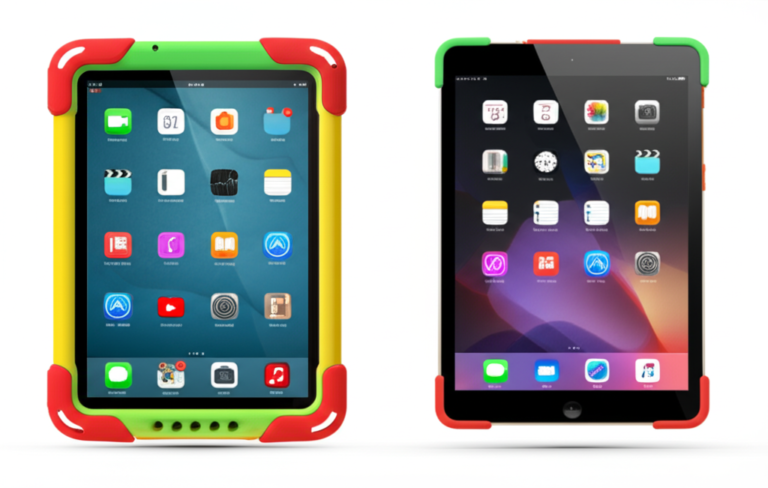
Support our educational content for free when you purchase through links on our site. Learn more
Amazon Kids Tablets vs. Samsung: 7 Picks to Compare 📱


For a simple, child-focused setup, choose an Amazon Fire Kids tablet; for Google Play apps, schoolwork, and a tablet that can grow with your child, choose Samsung Galaxy. If you’re searching “Amazon kids tablets samsung,” the key difference is that Fire prioritizes Amazon’s curated kids experience, while Samsung offers broader Android flexibility.
One parent on our team learned the difference during a family trip: the Fire was easy to hand over for downloaded stories, but the older child’s school app worked better on a Samsung tablet. That’s why the best pick depends less on a flashy spec sheet and more on what your child actually needs to do.
Key Takeaways
- Choose Amazon Fire Kids for a ready-to-use child profile, protective-case bundles, and Amazon Kids+ content.
- Choose Samsung Galaxy for Google Play access, broader app compatibility, and a tablet that adults and kids can share.
- Check the exact model and bundle: “Kids Edition,” included cases, styluses, subscriptions, storage, and warranty terms can vary by retailer and region.
- Before buying, confirm school-app compatibility and review parental controls, web access, purchases, and screen-time settings.
- Our top picks: Amazon Fire HD 8 Kids | Amazon Fire HD 10 Kids | Samsung Galaxy Tab A11+ | Samsung Galaxy Tab A9
Table of Contents
- ⚡ Quick Tips and Facts: Amazon Kids Tablets vs. Samsung
- 📚 Amazon Fire and Samsung Galaxy Kids Tablets: A Quick Background
- 🔍 What “Amazon Kids Tablets Samsung” Usually Means
- 🏆 The Best Amazon and Samsung Tablets for Kids
- 1. Amazon Fire HD 8 Kids: Best Compact Tablet for Younger Kids
- 2. Amazon Fire HD 10 Kids: Best Amazon Tablet for Bigger Screens
- 3. Amazon Fire HD 10 Kids Pro: Best for Older Kids and Twens
- 4. Samsung Galaxy Tab A9 Kids Edition: Best Samsung Tablet for Family Sharing
- 5. Samsung Galaxy Tab A11+ Kids Edition: Best Samsung Pick for School and Play
- 6. Samsung Galaxy Tab Series: Best Premium Android Tablet for Kids
- 7. Apple iPad: A Worthwhile Alternative to Amazon Fire and Samsung
- ⚖️ Amazon Fire Kids vs. Samsung Galaxy Kids Tablets: Key Differences
- Operating System, Apps, and Google Play Access
- Parental Controls and Child Profiles
- Kids’ Content, Learning Apps, and Streaming
- Screen Size, Resolution, and Eye Comfort
- Storage, Memory, and Expandable Space
- Battery Life, Charging, and Travel Use
- Durability, Kid-Prof Cases, and Repair Coverage
- Wi-Fi, Bluetooth, Cameras, and Accessories
- 🛡️ Amazon Kids+, Samsung Kids, and Parental Controls Explained
- How Amazon Kids and Amazon Kids+ Work
- How Samsung Kids Mode Works
- Screen-Time Limits, Bedtimes, and Approvals
- Web Browsing, Purchases, and Content Restrictions
- 🎯 Which Kids’ Tablet Should You Choose?
- Best Tablet for Todlers and Preschoolers
- Best Tablet for Elementary-School Kids
- Best Tablet for Older Kids, Twens, and Teens
- Best Tablet for Schoolwork and Student Apps
- Best Tablet for Reading, Travel, and Offline Entertainment
- 🧩 How to Choose an Amazon or Samsung Tablet for Your Child
- Match the Tablet to Your Child’s Age and Needs
- Check App Compatibility Before You Buy
- Compare Wi-Fi-Only and Cellular Models
- Choose the Right Case, Headphones, and Screen Protector
- 🔧 Setup Guide: Make a Fire or Galaxy Tablet Kid-Ready
- Create a Child Profile and Set Age-Appropriate Limits
- Download Apps and Entertainment for Offline Use
- Set Up Safe Browsing, Updates, and Family Sharing
- 💡 Practical Tips for Safer, Happier Tablet Time
- ❓ Frequently Asked Questions About Amazon and Samsung Kids Tablets
- Are Samsung tablets compatible with Amazon Kids+?
- Can you install Google Play on an Amazon Fire tablet?
- Is Samsung Kids free, and does it need a subscription?
- Can siblings share one tablet safely?
- How much storage does a child’s tablet need?
- When should you replace a child’s tablet?
- ✅ Final Verdict: Amazon Fire or Samsung Galaxy for Kids?
- 🔗 Recommended Links
- 📖 Reference Links
⚡ Quick Tips and Facts: Amazon Kids Tablets vs. Samsung
If you’re comparing Amazon kids tablets with Samsung Galaxy tablets, start with the family’s biggest need: easy parental controls and a curated content library, or a more flexible Android tablet that can grow with your child. Our guide to Amazon kids tablets covers the Amazon side in more detail.
| Quick question | Amazon Fire Kids | Samsung Galaxy |
|---|---|---|
| Best for | Younger kids and simple, parent-managed entertainment | Families who want Android apps, Google services, and longer-term flexibility |
| Kid-focused experience | Amazon Kids profiles and optional Amazon Kids+ subscription | Samsung Kids mode, with parent controls and a playful child interface |
| App ecosystem | Amazon Appstore; some popular Google apps are missing | Google Play Store on supported Galaxy tablets |
| Storage | Many Fire Kids models offer 32GB or 64GB, with microSD expansion on selected models | Varies by model; selected models support microSD expansion |
| Typical trade-off | Easy setup, but less app flexibility | More flexible, but setup and ongoing controls can take more parent effort |
| Best first check | Confirm the exact model, included content term, and warranty | Confirm that the specific model supports Samsung Kids and the apps your child needs |
Our quick verdict: Choose a Fire Kids tablet for a ready-made, protective setup and age-curated content. Choose Samsung if access to Google Play, YouTube, school apps, or a standard Android tablet matters more. “Kids Edition” is not a universal Samsung label: bundles and configurations vary by region and model, so verify the product listing before buying.
Samsung and Amazon specifications can change between generations. For example, the Samsung Galaxy Tab A11+ and Amazon’s Fire HD Kids models are not direct equivalents in every market. We’ll compare the family experience—not just the spec sheet—because the tablet that seems brilliant at checkout can become a tiny rectangle of parental troubleshooting by Tuesday. 📱
📚 Amazon Fire and Samsung Galaxy Kids Tablets: A Quick Background
Amazon Fire Kids tablets are standard Fire tablets bundled with child-oriented software, a protective case, and—on many Kids models—an included period of Amazon Kids+. Amazon’s Fire Kids tablet range is built around Amazon’s Fire OS and Appstore.
Samsung’s Galaxy tablets run Android with Samsung’s interface. Parents can use Samsung Kids to create a more contained, child-friendly environment, while the tablet remains a full Android device outside that mode. Samsung tablets use Google Play on supported models, giving families access to a broader selection of apps than the Amazon Appstore generally offers.
That difference shapes the whole experience. As New York Magazine’s Strategist puts it, “The operating system on a tablet naturally dictates the overall experience for you and your child.” Its kids’ tablet guide recommends the Samsung Galaxy Tab A11+ Kids Edition as an Android pick and the Amazon Fire HD 8 Kids for younger children.
A note on “Kids Edition” names
Retailers sometimes use “kids tablet,” “kids bundle,” or “Kids Edition” to describe different packages. A tablet may come with a case but not a subscription, or offer Samsung Kids without being a special hardware edition.
Before you buy, check:
- Exact model and generation
- Whether a protective case is included
- Whether Amazon Kids+ is included, and for how long
- Whether the tablet has the storage capacity you need
- Warranty and accidental-damage terms
- Whether the included apps and services are available in your country
🔍 What “Amazon Kids Tablets Samsung” Usually Means
Searches for “Amazon kids tablets Samsung” often mean one of three things:
- Comparing Amazon Fire Kids and Samsung Galaxy tablets for a child.
- Looking for a Samsung tablet sold on Amazon with a kid-friendly case or Samsung Kids mode.
- Checking whether Amazon Kids or Amazon Kids+ works on a Samsung tablet.
The answer to the third question is yes: the Amazon Kids app can be used on supported Android devices, including many Samsung tablets. App availability and features can vary by device, region, and software version. Amazon Kids+ is a content subscription, not the same thing as Samsung Kids mode or Android’s built-in parental settings.
| Product or service | What it does | Where it fits |
|---|---|---|
| Amazon Fire Kids tablet | Fire tablet bundled with kid-focused setup and hardware extras | Families wanting an Amazon-centered, ready-to-use package |
| Samsung Galaxy tablet | Android tablet with Google services on supported models | Families wanting broader Android flexibility |
| Samsung Kids | Child-friendly interface and controls on supported Samsung devices | Parents who want to create a kid-focused environment on a Galaxy tablet |
| Amazon Kids app | Amazon’s child profile and content experience on supported devices | Families who want Amazon’s kid content on a compatible Android device |
| Amazon Kids+ | Subscription library of children’s books, games, apps, and videos | Families who want a bundled, curated content service |
For wider model comparisons, see our tablet comparisons and kid-friendly tablets guides.
🏆 The Best Amazon and Samsung Tablets for Kids
These scores are comparative editorial assessments, not lab measurements. We weigh kid-friendliness, flexibility, durability, setup effort, and value for family use. Models and bundle details vary by retailer and country, so confirm current specifications with the linked manufacturer page before ordering.
| Tablet | Design | Kid-friendly features | App flexibility | Parental controls | Overall |
|---|---|---|---|---|---|
| Amazon Fire HD 8 Kids | 9/10 | 9/10 | 5/10 | 9/10 | 8.5/10 |
| Amazon Fire HD 10 Kids | 8/10 | 9/10 | 5/10 | 9/10 | 8.2/10 |
| Amazon Fire HD 10 Kids Pro | 8/10 | 8/10 | 5/10 | 8/10 | 7.8/10 |
| Samsung Galaxy Tab A9 Kids Edition or kid-focused bundle | 8/10 | 7/10 | 8/10 | 7/10 | 7.6/10 |
| Samsung Galaxy Tab A11+ Kids Edition or kid-focused bundle | 8/10 | 8/10 | 8/10 | 8/10 | 8.2/10 |
| Other Samsung Galaxy Tab models | 8/10 | 6/10 | 9/10 | 7/10 | 7.7/10 |
| Apple iPad | 8/10 | 6/10 | 9/10 | 8/10 | 8.0/10 |
How to read the table: Fire Kids models win on the out-of-box bundle and straightforward child profiles. Samsung stands out for Android flexibility. Neither brand is automatically “safer”: safe use depends on setup, parental oversight, and the specific apps a child can access.
1. Amazon Fire HD 8 Kids: Best Compact Tablet for Younger Kids
The Amazon Fire HD 8 Kids is the easier carry-around choice for younger children. The smaller screen is convenient for little hands, car trips, and short videos, while its kid-focused bundle typically includes a protective case and a period of Amazon Kids+.
The Strategist describes the Fire HD 8 Kids as a pick for younger kids and reports an 8-inch screen, expandable storage on the reviewed version, and a two-year Worry-Free Guarantee. Bundle details can change, so check the live listing rather than assuming every seller offers the same extras.
What parents tend to appreciate
- A child profile is designed to be quick to set up.
- The case offers extra grip and protection for everyday bumps.
- Amazon’s parent controls can manage content access and time routines.
- The smaller display is less awkward for a young child to hold.
What kids may notice
- Their favorite books, games, and videos can live together in one child profile.
- A built-in stand on some cases makes hands-free viewing easier.
- The screen is smaller than a 10- or 11-inch tablet, which may feel cramped for drawing or schoolwork.
Drawbacks
- The Amazon Appstore does not offer the same range as Google Play.
- Google apps, including an official YouTube app, may not be available as native Fire apps.
- Amazon Kids+ is a subscription after any included trial or bundle period.
Our parent testers often prefer the smaller Fire for younger kids because it is easier to manage during a snack, a flight, or a “please let me finish making dinner” moment. Just remember: a rugged case reduces risk; it does not make glass indestructible.
👉 CHECK PRICE on:
- Amazon Fire HD 8 Kids: Amazon | Walmart | Amazon Fire tablets
2. Amazon Fire HD 10 Kids: Best Amazon Tablet for Bigger Screens
The Amazon Fire HD 10 Kids gives children more room for books, videos, drawing, and simple games. It can be a sensible middle ground when an 8-inch display feels tight but you still want the Amazon Kids setup.
Benefits
- The larger display is more comfortable for shared reading and video.
- Amazon’s child profiles and age filters help parents create a controlled starting point.
- Selected Fire models support microSD storage expansion; confirm the current model’s limit with Amazon.
- A child-friendly case can make it easier to prop the screen up.
Trade-offs
- A larger tablet takes more room in a backpack and can feel heavier to small children.
- Fire OS and the Amazon Appstore remain less flexible than standard Android.
- A bigger screen does not replace parental decisions about time, content, and privacy.
👉 CHECK PRICE on:
- Amazon Fire HD 10 Kids: Amazon | Walmart | Amazon Fire tablets
3. Amazon Fire HD 10 Kids Pro: Best for Older Kids and Twens
The Fire HD 10 Kids Pro is aimed at older children than the standard Kids model, with a more grown-up presentation and a protective case. The Strategist’s review describes the Pro range as designed for roughly ages 6–12, with content curated for pretens. Always check the age guidance on the exact package you’re considering.
The first YouTube video focuses on this model’s practical extras: a grippy protective case with a stand, a stylus for drawing, a parent dashboard, and an adult profile option. The presenter calls it “the amazon fire hd 10 made specifically for kids” and highlights the handle and stand. Those are useful everyday details, although the stylus and included accessories depend on the bundle.
Why an older child might like it
- A larger screen works better for longer reading and drawing sessions.
- The slimmer, less preschool-looking case may appeal to twens.
- The child can use books, games, educational apps, and supported streaming services.
- An adult profile means a parent may use the tablet too.
Why a parent might hesitate
- Fire OS still has Amazon Appstore limitations.
- Kids+ content and subscription terms should be checked before relying on the included period.
- Older children may soon need Google Classroom, a particular school app, or other software that is easier to get on Android.
👉 CHECK PRICE on:
- Amazon Fire HD 10 Kids Pro: Amazon | Walmart | Amazon Fire tablets
4. Samsung Galaxy Tab A9 Kids Edition: Best Samsung Tablet for Family Sharing
Samsung’s Galaxy Tab A9 range may be sold with a kid-focused bundle, case, or accessory depending on region and retailer. It is not safe to assume every Tab A9 listing is a dedicated Kids Edition package. Check the listing contents and confirm that the exact model supports Samsung Kids.
The Samsung Galaxy Tab A9 runs Android and is better suited than a Fire tablet when a family wants access to Google Play apps. A parent can use Samsung Kids for a child-focused space and switch back to the standard tablet experience when appropriate.
Strengths
- Google Play gives access to a broader Android app catalog.
- Samsung Kids offers a child-oriented interface on supported devices.
- Standard Android use can be more practical for family sharing.
- Samsung’s software and support ecosystem can suit households already using Galaxy phones.
Limitations
- You may need to buy a case separately.
- A larger app catalog means more choices to review, not automatic child safety.
- Samsung Kids and Android parental controls require setup; they do not decide every content question for you.
👉 CHECK PRICE on:
- Samsung Galaxy Tab A9: Amazon | Walmart | Samsung Official Website
5. Samsung Galaxy Tab A11+ Kids Edition: Best Samsung Pick for School and Play
The Samsung Galaxy Tab A11+ has been highlighted by The Strategist as its best Android pick for kids, especially for families who want a full Android tablet that can switch into a child-focused mode. The review describes a kid-friendly setup with an included protective case and stylus for the Kids Edition package it tested. Included accessories vary by market and listing, so check the exact bundle.
Why it earns a look
- Samsung Kids provides a child-oriented interface.
- Android and Google Play make it more flexible for school, video, and family apps.
- A standard adult profile lets the device serve more than one purpose.
- A larger screen is useful for reading, drawing, and homework.
The catches
- It may take more initial setup than a Fire Kids bundle.
- Not every seller’s Tab A11+ listing includes the Kids Edition case or stylus.
- Its wider Android ecosystem means parents should review app permissions and content settings.
The Strategist calls it “a full-fledged tablet for parents” that can switch quickly to a kid-focused mode. That is the central Samsung advantage: the tablet does not have to remain a child-only device as your child grows.
👉 CHECK PRICE on:
- Samsung Galaxy Tab A11+: Amazon | Walmart | Samsung Official Website
6. Samsung Galaxy Tab Series: Best Premium Android Tablet for Kids
Samsung’s broader Galaxy Tab range includes models with different screen sizes, performance levels, and features. A more capable model can suit older students who need several school apps, multitasking, or a larger screen. But a premium adult tablet is not automatically the best kids’ tablet: spending more on hardware does not provide better parental supervision by itself.
For school-focused picks, explore our educational tablets category. If you are choosing between Android and iPad models, our tablet comparisons can help narrow the field.
Look for
- A recent software-support commitment for the specific model
- Enough storage for school files, books, and offline media
- A sturdy case designed for that exact tablet
- A screen size your child can comfortably carry
- Compatibility with required school apps and accessories
👉 CHECK PRICE on:
- Samsung Galaxy Tab models: Amazon | Walmart | Samsung tablets
7. Apple iPad: A Worthwhile Alternative to Amazon Fire and Samsung
An Apple iPad may make sense if your family already uses Apple devices or your child needs a particular iPadOS app. It has a broad app ecosystem and Apple’s Screen Time controls, but it typically needs a separate protective case and parent configuration. It does not come with the same child-focused bundle as many Fire Kids models.
Apple’s Screen Time tools can manage app limits, content restrictions, and family settings. As with Samsung, check that the child’s school apps and accessories work with the exact iPad model.
👉 CHECK PRICE on:
- Apple iPad: Amazon | Walmart | Apple Official Website
⚖️ Amazon Fire Kids vs. Samsung Galaxy Kids Tablets: Key Differences
| Factor | Amazon Fire Kids | Samsung Galaxy |
|---|---|---|
| Operating system | Fire OS | Android with Samsung’s interface |
| App store | Amazon Appstore | Google Play on supported models |
| Child setup | Amazon Kids child profile | Samsung Kids mode; Android family settings also available |
| Content subscription | Amazon Kids+ is optional after any included term | Samsung Kids itself is a mode; third-party services may require subscriptions |
| Family flexibility | Strong for a managed, child-focused tablet | Strong for shared use and broader Android apps |
| Setup effort | Usually straightforward for Amazon households | More configuration choices and controls to review |
| Best fit | Younger kids and simple entertainment | School use, Google services, and a tablet that can grow with the child |
Operating System, Apps, and Google Play Access
Fire OS is Amazon’s operating system, built around Amazon services and the Amazon Appstore. Samsung Galaxy tablets use Android, with Google Play available on supported models. This is why the same app may be easy to install on Samsung but unavailable or limited on Fire.
The Strategist notes that Fire tablets lack an official YouTube app in the Amazon Appstore, while YouTube may be accessed through Silk Browser or other workarounds. Availability can change, and a workaround is not always as convenient—or as appropriate for a child—as an official app.
Practical rule: Before buying, search the exact model’s app store for the apps your child actually needs: school portals, learning tools, video platforms, messaging apps, and accessibility software. Do not buy based on “Android-compatible” assumptions alone.
Parental Controls and Child Profiles
Amazon Kids and Samsung Kids create child-oriented experiences, but they work differently. Amazon emphasizes profiles and curated content through its Parent Dashboard. Samsung Kids creates a controlled interface on a Galaxy device. Android’s Google Family Link can also help parents manage supported Android devices and accounts.
The American Academy of Pediatrics recommends making a family media plan that considers a child’s age, health, education, and sleep—not just a daily screen-time number. Its Family Media Plan tool is a useful starting point.
Our parent-tested setup habit: Create a child profile, test it yourself, then hand over the tablet. A few minutes checking purchases, web access, and app permissions can prevent a surprising amount of “How did this get installed?” detective work.
Kids’ Content, Learning Apps, and Streaming
Amazon Kids+ offers a curated selection of children’s books, games, apps, and videos, subject to the current catalog and subscription terms. Samsung’s advantage is flexibility: supported Galaxy tablets can access Google Play apps, including many learning and streaming services.
More content is not always better. We suggest making a short approved list based on what your child will actually use:
- Reading: e-books, library apps, and audiobooks
- Learning: age-appropriate math, literacy, language, or creativity apps
- Communication: only the tools your family and school approve
- Entertainment: services with child profiles and clear viewing controls
- Offline use: content downloaded in advance for travel
For learning-first picks, see our educational tablets.
Screen Size, Resolution, and Eye Comfort
An 8-inch screen is easier for small hands and travel. A 10- or 11-inch screen gives more space for shared reading, drawing, and homework. Bigger screens can also make a device heavier and more awkward to carry.
The Strategist’s reviewed selection spans roughly 6 to 13 inches, with its reported Samsung Galaxy Tab A11+ configuration offering an 11-inch display. Specifications vary by model and region, so verify them with the manufacturer.
The American Academy of Ophthalmology advises regular breaks during screen use and notes that prolonged close-up focusing can contribute to eye strain. See its guidance on digital devices and eye health. Try the 20-20-20 habit: every 20 minutes, look at something about 20 feet away for 20 seconds.
Storage, Memory, and Expandable Space
Storage needs depend on whether your child streams or downloads. Books use relatively little space; offline videos, games, and creative projects can fill it much faster.
| Family use | Storage planning |
|---|---|
| Mostly streaming and web-based schoolwork | Modest built-in storage may be sufficient |
| Several games and learning apps | Choose more built-in storage where practical |
| Long trips with downloaded videos | Check microSD support and storage limits |
| Photos, drawings, and school files | Plan to review downloads and back up important work |
Some Fire and Samsung models support microSD cards, but not every model does, and supported capacities differ. Check the product specification before ordering. A memory card expands storage; it does not necessarily make every app or system file movable.
Battery Life, Charging, and Travel Use
Manufacturers’ battery estimates are not guarantees. Brightness, Wi-Fi, video playback, background apps, and battery age all affect real use. The Strategist reports rated figures of around 13 hours for its reviewed Fire HD 8 Kids and Fire HD 10 Kids Pro, and 15 hours for the Samsung Tab A11+ configuration it tested. Those are reported model figures, not a promise that every family will get the same runtime.
For travel:
- Charge the tablet before leaving.
- Download approved content while connected to Wi-Fi.
- Pack a compatible charger and a labeled case.
- Test headphones and volume limits before the journey.
- Bring a backup activity; no battery lasts forever, especially when a child discovers autoplay.
Durability, Kid-Prof Cases, and Repair Coverage
A case is often a better first investment than a faster processor. Fire Kids bundles commonly include a child-friendly case, while Samsung bundles vary. If the Samsung listing does not include one, choose a case made for that exact model, with raised edges and a secure fit.
Amazon’s Worry-Free Guarantee terms apply to eligible Kids devices and can change. Read the official warranty information for current coverage and exclusions. Do not confuse a limited replacement guarantee with an unlimited repair plan.
Parent tip: Put a name label on the case, not across vents or ports. It sounds obvious until two identical tablets arrive at a playdate.
Wi-Fi, Bluetooth, Cameras, and Accessories
Most child-focused tablets are Wi-Fi models. Confirm cellular support if your child genuinely needs mobile data, and consider whether a school or family plan already provides a safer alternative.
Check accessory compatibility before buying:
- USB-C charging and data support
- Bluetooth headphones
- Stylus compatibility
- Keyboard support for schoolwork
- Case fit for the exact model and generation
- Camera quality for video calls or school tasks
A stylus included in one Samsung or Amazon bundle may not be included in another. Product photos are not a reliable substitute for the “What’s in the box” list.
🛡️ Amazon Kids+, Samsung Kids, and Parental Controls Explained
How Amazon Kids and Amazon Kids+ Work
Amazon Kids provides child profiles and parent controls on supported devices. Amazon Kids+ adds a subscription content library. The subscription is not required for every basic parental control: Amazon’s Parent Dashboard can manage settings on supported devices, but specific features and access depend on the product and account.
Before relying on an included subscription:
- Check how long the included term lasts.
- Read the renewal and cancellation terms.
- Confirm the current catalog includes the content your child wants.
- Review age settings and profile controls.
- Decide whether you want a subscription after the included period.
Amazon explains its current service and account features through its Amazon Kids help pages.
How Samsung Kids Mode Works
Samsung Kids offers a separate, child-oriented environment on supported Galaxy devices. Parents can set access and time controls, while a PIN or other device security method can protect the exit back to the main tablet interface. Exact options vary by device and software version; Samsung’s Samsung Kids support page provides current instructions.
Samsung Kids is not a separate tablet operating system. It is a mode within the Galaxy experience. Parents should check how apps, downloads, and settings behave on the specific device and keep the standard adult profile protected.
Screen-Time Limits, Bedtimes, and Approvals
The best screen-time plan is one the family can actually follow. Use device controls for schedules and limits, then pair them with consistent routines.
- Choose screen-free times, such as meals and the hour before bed.
- Set a predictable daily window rather than negotiating every session.
- Use age-appropriate content settings and review them periodically.
- Keep charging outside the bedroom when practical.
- Revisit the plan as schoolwork, maturity, and family needs change.
The AP’s HealthyChildren.org screen-media guidance emphasizes age-appropriate boundaries and family context. Parental controls help enforce a plan; they do not replace conversations with your child.
Web Browsing, Purchases, and Content Restrictions
Before handing over a tablet, check:
- Whether a browser is available in the child profile
- Whether purchases require an adult approval
- Whether in-app purchases are blocked or supervised
- Whether video autoplay and recommendations are enabled
- Which apps can use the microphone, camera, and location
- Whether your child can message, upload, or post content
On Samsung, review the device’s Android and Google account controls as well as Samsung Kids. On Fire, review the child profile and Parent Dashboard. A restricted profile can still expose surprises through a browser, an app update, or a shared account—so test the setup yourself.
🎯 Which Kids’ Tablet Should You Choose?
Best Tablet for Todlers and Preschoolers
For a young child who mainly watches selected videos, listens to stories, or uses a few simple learning apps, the Fire HD 8 Kids is an easy recommendation. It is compact and typically comes with a child-oriented case and setup.
Samsung can also work well, particularly if you already own a Galaxy tablet and want to use Samsung Kids. If you choose Samsung, spend time setting up the child mode and approved apps before handing it over.
Best Tablet for Elementary-School Kids
For an elementary-school child, choose based on the school’s apps:
- Fire Kids: good for curated entertainment and simple family controls.
- Samsung Galaxy Tab: better when Google Play, school portals, or particular Android apps are required.
- Either brand: suitable for reading, drawing, and learning when configured carefully.
The parent’s experience matters too. A device you understand and can supervise consistently is usually better than a more powerful tablet whose controls you never finish setting up.
Best Tablet for Older Kids, Twens, and Teens
For older children, Samsung often has the advantage because it is a full Android tablet with broader app access and more room to transition toward school use. The Fire HD 10 Kids Pro can still suit a child whose needs fit Amazon’s content and app selection.
Ask your child what they need—but verify the answer. “I need this app for school” may be true, or it may be a very persuasive request for a video platform.
Best Tablet for Schoolwork and Student Apps
Start with the school’s actual requirements. Confirm operating-system support, browser compatibility, keyboard needs, and file access. Do not assume a Fire tablet supports every Android school app. For schoolwork that depends on Google services or common Android applications, a Samsung Galaxy tablet may be the safer fit.
Browse our educational tablets for more school-oriented options.
Best Tablet for Reading, Travel, and Offline Entertainment
For reading and selected offline entertainment, Fire Kids models are convenient if the content is available through Amazon services. For a larger app choice or a family library spread across platforms, Samsung offers more flexibility. Either way, download content in advance and test it in airplane mode before travel.
🧩 How to Choose an Amazon or Samsung Tablet for Your Child
Match the Tablet to Your Child’s Age and Needs
Consider:
- Hand size and carrying comfort
- Reading, games, schoolwork, or video use
- How independently your child can manage apps
- Whether siblings need separate profiles
- How much supervision the family wants
- How long you expect the tablet to remain useful
A younger child may benefit from a simpler, controlled setup. An older student may need a broader app ecosystem and a keyboard. There is no magic age at which a tablet becomes “safe”; the appropriate choice depends on the child and the family’s boundaries.
Check App Compatibility Before You Buy
Make a list of must-have apps and check them against the exact operating system. Verify:
- The app is available in the tablet’s store.
- It supports the device’s OS version.
- Its account requirements suit your child.
- Its privacy and purchase settings are acceptable.
- It works offline if your child needs it on trips.
Use the Google Play Store or Amazon listing to check app availability, and consult the school’s device guidance where relevant.
Compare Wi-Fi-Only and Cellular Models
Wi-Fi-only models are enough for many homes and schools. Cellular access may be useful for travel or supervised communication, but it adds another layer of data planning and parental oversight. Confirm cellular support on the exact model: many Fire Kids and Galaxy tablets are Wi-Fi-only.
Choose the Right Case, Headphones, and Screen Protector
Prioritize a fitted case and comfortable headphones. Look for:
- A secure grip or handle for younger children
- A stand if the tablet is used for video or drawing
- Raised corners and screen edges
- Headphones that fit your child comfortably
- A screen protector compatible with the case
Keep volume at a sensible level. The World Health Organization explains safe listening practices for personal audio devices in its Make Listening Safe guidance.
🔧 Setup Guide: Make a Fire or Galaxy Tablet Kid-Ready
Create a Child Profile and Set Age-Appropriate Limits
Amazon Fire
- Update the tablet and connect it to Wi-Fi.
- Sign in to the adult Amazon account.
- Create a child profile in Amazon Kids.
- Set age and content preferences.
- Review time limits, bedtime settings, and web access.
- Test the profile before handing over the device.
Samsung Galaxy
- Update the tablet and create or sign in to the relevant account.
- Open Samsung Kids on a supported device.
- Set a secure PIN or other exit control.
- Choose approved apps and access settings.
- Review Google account and Family Link settings where relevant.
- Test the child experience and adult-profile boundary.
Settings and menu names can change with software updates. Use the linked Amazon Kids help and Samsung Kids instructions for current steps.
Download Apps and Entertainment for Offline Use
Before a trip or school day:
- Download approved books, videos, and games over Wi-Fi.
- Confirm downloads appear inside the child profile.
- Check whether the content expires or needs periodic online access.
- Leave room for system updates and new school files.
- Test playback with Wi-Fi turned off.
A common family surprise: the video downloaded to the adult profile may not appear in the child profile. Test first, and you’ll avoid the airport gate becoming a troubleshooting desk.
Set Up Safe Browsing, Updates, and Family Sharing
- Install system updates before regular use.
- Use a strong adult account password and device PIN.
- Turn on purchase approval where available.
- Review browser access and app permissions.
- Use separate child profiles when siblings have different ages or rules.
- Remove accounts and stored data before passing the tablet to someone else.
The Federal Trade Commission’s guidance on children’s privacy is a useful reminder to review what apps collect and share.
💡 Practical Tips for Safer, Happier Tablet Time
- Keep screens out of bedtime routines. The AP recommends media plans that protect sleep and family activities.
- Use shared spaces for younger children’s tablet time.
- Preview new apps before allowing independent use.
- Talk about ads, links, and strangers online in simple, age-appropriate language.
- Keep the adult account private.
- Set expectations before handing over the tablet, not during the final minute of battery.
- Choose content together. A child who helps pick books and learning apps may be more willing to follow limits.
- Use a case, but still teach care. “It has a rugged case” is not a thrilling invitation to test gravity.
The FTC’s parent resources on children’s online privacy and the AP’s Family Media Plan offer useful, practical guidance.
❓ Frequently Asked Questions About Amazon and Samsung Kids Tablets
What’s the difference between Amazon Fire Kids tablets and Samsung Galaxy Tab A Kids Edition?
Amazon Fire Kids tablets are Fire OS devices typically sold with a child-focused case, Amazon Kids setup, and—in many bundles—an included Kids+ subscription period. Samsung Galaxy tablets are Android devices; Samsung Kids mode can provide a child-friendly environment, while Google Play offers a broader app selection on supported models.
In short: Fire is often simpler as a child-first bundle. Samsung is usually more flexible as a family or school tablet. Bundle names and included accessories vary, so compare the exact product listings.
Are Amazon Kids tablets better than Samsung tablets for younger children?
Often, yes, for families who want a compact device with a child-focused case, simple profiles, and curated Amazon content. The Fire HD 8 Kids is a strong fit for that use. But Samsung can better if the family already uses Android, needs specific Google Play apps, or prefers a device that adults and children can share.
The better tablet is the one you can configure and supervise confidently.
Can you install Amazon Kids+ on a Samsung tablet?
Amazon Kids is available on supported Android devices, including many Samsung tablets. Amazon Kids+ content access depends on the app, device compatibility, region, account, and subscription. Check the Amazon Kids app listing and the app store on your exact Samsung model before subscribing.
Amazon Kids+ does not replace Samsung Kids or Android’s parental controls. You may use Amazon’s content service alongside Samsung’s device-level child mode, subject to compatibility and your setup.
Which Samsung tablet is the best alternative to an Amazon Fire Kids tablet?
The Samsung Galaxy Tab A11+ is a strong alternative if you want a larger Android tablet, Google Play access, and Samsung Kids support. The Galaxy Tab A9 can suit families seeking a smaller or simpler Android device, but confirm the current model’s screen, software support, and compatibility with Samsung Kids.
If you need a tablet mainly for younger children’s curated entertainment, compare the complete bundle—not just the tablet—to the Fire HD 8 Kids.
Can children use YouTube on Amazon Fire Kids tablets?
YouTube availability on Fire devices differs from its availability on Samsung Android tablets. Fire models may lack an official YouTube app in the Amazon Appstore, while browser access or other options may be available. Check current Amazon support and the tablet’s app store, then decide whether browser access is appropriate for your child.
Does Samsung Kids require a subscription?
Samsung Kids is a child-focused mode, not a subscription content library like Amazon Kids+. Individual apps, games, video services, and educational platforms may still require subscriptions or purchases. Review each app’s terms and in-app purchase settings.
How much storage does a child’s tablet need?
It depends on downloads. A child who streams and reads online may need less storage than one who saves multiple videos, games, and school files. Check whether the exact tablet supports microSD expansion and what its maximum capacity is. Amazon and Samsung models differ, so do not assume every device has a card slot.
Can siblings share one Amazon or Samsung tablet safely?
They can, but separate child profiles are preferable when children have different ages, content rules, or screen-time schedules. Keep the adult profile protected and review which downloads, browser settings, and purchases are shared. A shared device works best when each child knows whose profile is active.
Is a Fire Kids tablet durable enough without a screen protector?
A protective case helps, but it cannot guarantee against a cracked screen or damage from a hard fall. Check whether the included case covers the screen edges, and consider a compatible screen protector. Review warranty terms before buying, because accidental-damage coverage has conditions and exclusions.
🔧 Setup Guide: Make a Fire or Galaxy Tablet Kid-Ready
- Update the device and install only essential apps.
- Create a child profile and protect the adult profile with a PIN.
- Set age-appropriate content and time controls.
- Review purchases, browser access, and app permissions.
- Download and test offline content before travel.
- Check the case, charger, and headphones for fit and compatibility.
- Agree on family rules for where, when, and how the tablet is used.
Use Amazon’s current Kids help resources or Samsung’s Samsung Kids support if menus differ from these general steps.